Woodlands Checkpoint: Decoding the Daily Jam
10 November 2025
Plan your commute with SG Traffic Map!
Visit sgtrafficmap.com to view current and historical traffic camera images across Singapore. Easily check traffic conditions before you leave, or analyze past patterns to plan your travel routes more effectively.
The Woodlands Checkpoint, a critical artery connecting Singapore and Malaysia, is notorious for its persistent congestion. For countless daily commuters and travellers, the sight of long queues of vehicles has become an expected part of the journey. But what exactly fuels this constant gridlock? Is it merely the sheer volume of cross-border traffic, or are there deeper, more complex factors at play?
We've investigated common theories surrounding Woodlands Checkpoint congestion, analyzing them against available data. This article presents the key reasons behind the significant delays experienced at this vital gateway.
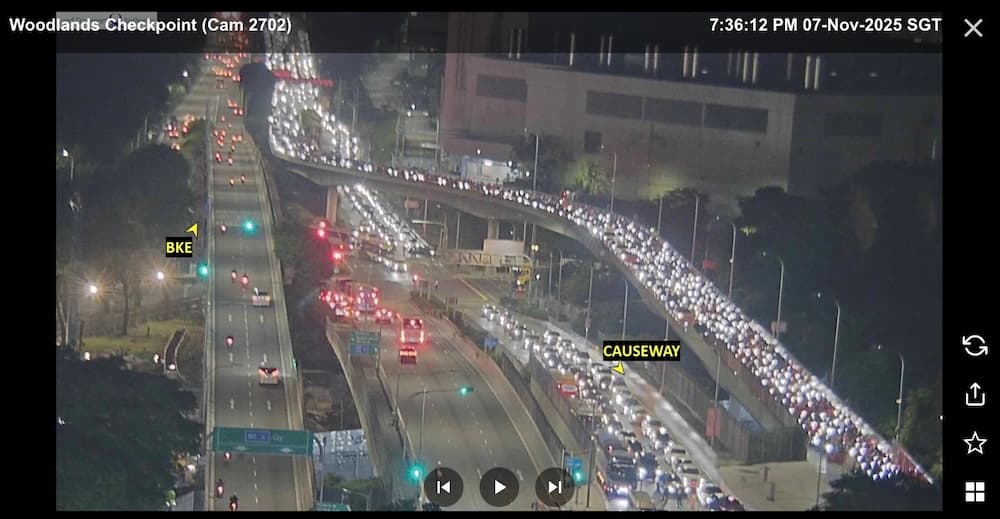
1. High Volume of Daily Commuters: A Constant Flow Across the Causeway
The primary driver of congestion at Woodlands Checkpoint is the immense volume of people and vehicles that cross the Causeway daily. This includes Malaysian workers commuting to Singapore, Singaporeans travelling to Malaysia for work or leisure, and a significant number of tourists.
The Data Speaks:
- Massive Daily Crossings: The Immigration & Checkpoints Authority (ICA) consistently reports that hundreds of thousands of travellers use the land checkpoints (Woodlands and Tuas) daily. Pre-COVID, this figure was around 400,000, and post-pandemic, it has often surpassed these levels during peak periods.
- Peak Hour Surges: Morning and evening peak hours, as well as weekends and public holidays, see a dramatic surge in traffic, far exceeding the checkpoint's optimal processing capacity.
The Impact:
The sheer number of individuals and vehicles attempting to clear immigration and customs simultaneously creates an inevitable bottleneck. Despite continuous efforts by both Singaporean and Malaysian authorities to streamline processes, the physical infrastructure and human resources can only handle so much volume at any given time. This constant, high-density flow means that even minor delays can quickly escalate into long queues.
2. Infrastructure Limitations and Chokepoints: The Causeway's Design
While both countries have invested in upgrading checkpoint facilities, the fundamental design of the Causeway itself presents inherent limitations that contribute to congestion.
The Data Speaks:
- Fixed Number of Lanes: The Causeway has a finite number of lanes for cars, motorcycles, and lorries. Expanding these lanes significantly is challenging due to geographical constraints.
- Sequential Processing: Vehicles must pass through multiple stages: toll booths, immigration checks, and customs inspections. Each stage, even if efficient, adds to the overall processing time.
The Impact:
The sequential nature of clearance, combined with the fixed number of lanes, means that any slowdown at one stage impacts all subsequent stages. For instance, if immigration officers are processing a complex case, it can hold up an entire lane of vehicles. The design, while functional, was conceived in a different era and struggles to cope with today's unprecedented traffic volumes. Future infrastructure projects, like the Johor Bahru-Singapore Rapid Transit System (RTS Link), aim to alleviate some of this pressure by shifting commuters to rail, but road congestion is likely to remain a challenge.
3. Security Protocols and Checks: A Necessary Delay
Given the importance of border security, stringent checks are a non-negotiable aspect of crossing the Woodlands Checkpoint. These protocols, while essential, inherently add to processing times.
The Data Speaks:
- Enhanced Security Measures: In recent years, both Singapore and Malaysia have implemented enhanced security measures, including more thorough vehicle inspections and biometric checks for travellers.
- Random Checks: Random checks for contraband, illegal immigrants, and other security threats are routinely conducted, which can cause unpredictable delays.
The Impact:
Every security check, no matter how quick, adds a small increment of time to the overall process. When multiplied by hundreds of thousands of travellers, these increments accumulate into significant delays. While technology helps to speed up some aspects, human intervention and physical inspections remain crucial for security, making it a persistent factor in congestion. Travellers often experience frustration, but these measures are vital for national security.
4. Incidents and Unforeseen Events: Accidents, Breakdowns, and System Glitches
Beyond the structural and operational factors, unexpected incidents frequently contribute to sudden and severe congestion at Woodlands Checkpoint.
The Data Speaks:
- Frequent Reports: News outlets and traffic monitoring apps frequently report incidents such as vehicle breakdowns on the Causeway, minor accidents within checkpoint premises, or system outages affecting immigration clearance.
- Ripple Effect: Even a small incident can have a disproportionately large impact on traffic flow due to the high density of vehicles.
The Impact:
An accident or a broken-down vehicle can block one or more lanes, drastically reducing the checkpoint's capacity. Similarly, a glitch in the electronic clearance system can force manual processing, leading to significant slowdowns. These unforeseen events, while not constant, are frequent enough to be a significant contributor to the checkpoint's notorious congestion, turning an already slow commute into an hours-long ordeal. Travellers are often advised to check traffic conditions before embarking on their journey, precisely because such incidents are common and unpredictable.
Conclusion: A Complex Cross-Border Challenge
The persistent congestion at Woodlands Checkpoint is a multifaceted problem, stemming from the sheer volume of daily crossings, inherent infrastructure limitations, essential security protocols, and unpredictable incidents. It's a challenge that both Singapore and Malaysia continuously work to mitigate through technological advancements, operational adjustments, and long-term infrastructure projects like the RTS Link.
For now, cross-border travellers will need to continue exercising patience, staying informed about real-time traffic conditions, and planning their journeys strategically to navigate one of the busiest land checkpoints in the world.