Why is the CTE So Congested? Unpacking Singapore's Busiest Highway
8 November 2025
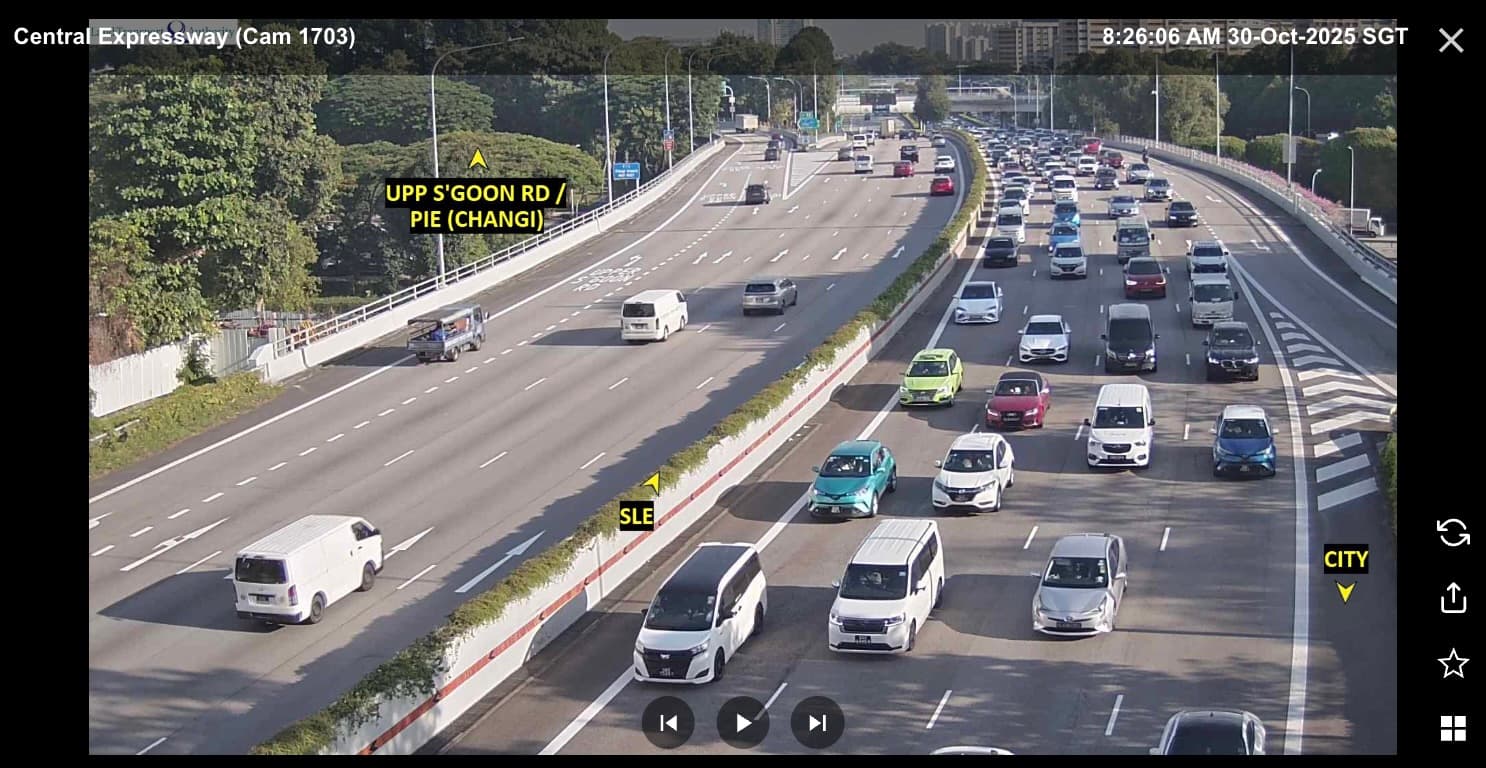
Plan your commute with SG Traffic Map!
Visit sgtrafficmap.com to view current and historical traffic camera images across Singapore. Easily check traffic conditions before you leave, or analyze past patterns to plan your travel routes more effectively.
If you're a driver in Singapore, the Central Expressway (CTE) is likely a familiar name, and often, a source of frustration. The sight of brake lights stretching for what seems like kilometres, especially during peak hours, has become a daily reality for many. But what exactly is driving this persistent congestion? Is it just more cars, or are there deeper, more complex factors at play?
We've delved into several common hypotheses about CTE congestion, examining them against recent data. Here, we present the supported reasons, shedding light on why Singapore's vital artery is feeling the squeeze.
1. The Northern Boom: A Growing Population Funneling Onto the CTE
One of the most significant, yet often overlooked, drivers of CTE congestion is the remarkable population growth in Singapore's northern and north-eastern regions. Towns like Woodlands, Sembawang, Canberra, Punggol, and Sengkang have transformed into vibrant, densely populated residential hubs.
The Data Speaks:
- Population Surge: Official statistics from the Singapore Department of Statistics (SingStat) consistently show these planning areas among the most populous in the nation. For instance, the Census of Population 2020 highlighted Woodlands with over 250,000 residents and Punggol as a rapidly growing young town. More recent data for June 2025 pegs Sengkang's population at 267,600.
- Residential Concentration: These areas serve as massive catchment zones, with a significant portion of their residents commuting towards the Central Business District (CBD) and other key employment areas, for which the CTE is often the most direct route.
The Impact:
Imagine thousands of households, each potentially owning one or more cars, all attempting to access the same expressway at roughly the same time during morning and evening commutes. This creates a funnel effect, where the sheer volume of vehicles from these burgeoning estates overwhelms the CTE's capacity. While Singapore's urban planners have meticulously developed these towns, the demand placed on core infrastructure like the CTE continues to intensify with each new resident. The continued development of these areas, coupled with the natural increase in population within them, means this pressure point on the CTE is unlikely to abate soon.
2. The Rise of the Ride-Hailing Economy: More Private Hire Vehicles (PHVs) on the Road
The advent and rapid expansion of the ride-hailing economy have dramatically reshaped urban transport. While offering convenience and flexibility, the surge in Private Hire Vehicles (PHVs) has undeniably added to the overall traffic volume, particularly on key expressways like the CTE.
The Data Speaks:
- Significant Growth: LTA statistics confirm a robust and steady increase in the PHV population. The total number of PHVs (including both self-drive and chauffeur-driven) grew from 67,990 in 2021 to a substantial 90,383 by the end of 2024.
- Accelerated Expansion: The period from 2023 to 2024 alone saw a remarkable 10.6% increase in PHV numbers, indicating a sustained upward trend.
The Impact:
Unlike personal cars that might be parked for large parts of the day, many PHVs are actively on the road for extended periods, constantly circulating as they ferry passengers. This means a higher utilisation rate for each vehicle, contributing more consistently to traffic volume throughout the day, not just during traditional peak hours. Furthermore, PHVs often converge on popular pick-up and drop-off points, which can sometimes lead to localized congestion even off the main expressway, indirectly impacting traffic flow onto and off the CTE. The convenience they offer comes at the cost of increased vehicle density, and the CTE, being a central artery, naturally bears a significant brunt of this increased activity.
3. The Cross-Border Connection: A Resurgence of Foreign Vehicles and Motorcycles
Singapore's geographical proximity to Malaysia means cross-border traffic has always been a factor in road congestion. Post-pandemic, the reopening of borders has led to a significant rebound in the volume of foreign vehicles entering Singapore, adding another layer to the CTE's woes.
The Data Speaks:
- Exceeding Pre-COVID Levels: While specific CTE data for foreign vehicles isn't available, the Immigration & Checkpoints Authority (ICA) Annual Statistics for 2023 provide compelling proxy data. It highlighted that traveller volume at the land checkpoints (Woodlands and Tuas) surpassed pre-COVID-19 levels during peak periods.
- Increased Daily Volume: Daily traveller volume at these checkpoints reached approximately 440,000 during peaks, a notable increase from the pre-COVID average of 400,000.
The Impact:
The sheer number of individuals crossing the borders translates directly into more foreign-registered cars and motorcycles on Singaporean roads. Many of these vehicles, particularly those heading to work or for leisure in the city, will inevitably use the CTE. This influx, especially during weekends and public holidays, can significantly amplify congestion. The CTE's northern entry and exit points, connecting directly to the main routes from Woodlands Checkpoint, are particularly susceptible to this volume. While beneficial for tourism and economic ties, the added cross-border traffic presents a considerable challenge for maintaining smooth traffic flow on key expressways.
4. A Worrying Trend: More Careless and Reckless Driving on Our Roads
Perhaps the most concerning, and often infuriating, reason for CTE congestion isn't just the sheer number of vehicles, but the manner in which some are driven. Increased instances of careless and reckless driving directly contribute to accidents and traffic disruptions, exacerbating existing congestion.
The Data Speaks:
- Alarming Rise in Speeding: The Singapore Police Force (SPF) Annual Road Traffic Situation report for 2024 revealed a stark increase in dangerous driving. Speeding violations skyrocketed by 64.8%, from 116,440 in 2023 to a staggering 191,931 in 2024.
- Fatal Consequences: More critically, speeding-related fatal accidents jumped by 43.8% during the same period.
- More Accidents Overall: The total number of accidents resulting in injuries also saw an increase, from 6,949 in 2023 to 7,049 in 2024.
The Impact:
Careless driving manifests in many ways: sudden lane changes, tailgating, distracted driving, and most detrimentally, speeding. Such behaviours significantly increase the risk of accidents. Even minor fender-benders on an expressway like the CTE can bring traffic to a grinding halt, creating ripple effects that stretch for kilometres and last for hours. When a lane is blocked due to an accident, the effective capacity of the road drops dramatically, turning heavy traffic into gridlock. Furthermore, aggressive driving can lead to "phantom jams" where sudden braking by one vehicle forces a chain reaction of braking behind it, slowing down traffic even without a physical obstruction. This increasing trend of reckless behaviour not only makes the roads more dangerous but also less efficient, contributing heavily to the CTE's notorious congestion.
Conclusion: A Multi-Faceted Challenge
The congestion on the CTE is not attributable to a single factor but rather a complex interplay of demographic shifts, evolving transportation patterns, and unfortunately, deteriorating driving habits. The continuous growth of northern towns, the proliferation of private hire vehicles, the resurgence of cross-border traffic, and a concerning rise in careless driving all converge to choke this essential expressway.
While infrastructure improvements and traffic management systems play a crucial role, addressing CTE congestion will require a multi-pronged approach. This includes encouraging public transport use, promoting safer driving habits through education and enforcement, and continuously adapting our urban planning to meet the demands of a growing population. Until then, drivers on the CTE might need to continue exercising patience and planning extra travel time.